18 October 2026 · Ing. et Ing. arch. Jiří Lukeš
Good living starts with the location
European cities that offer affordable, high-quality housing do not rely on individual projects. They build on land they have set aside, based on clear quality criteria and patient planning. For Czech municipalities, which have a new law and new funding as of this year, this is practical experience, not theory.
Housing is back on the agenda for municipalities
Just a few years ago, council housing in the Czech Republic was largely a thing of the past. Flats were being privatised, new ones were rarely being built, and most municipalities had left housing to the market. That is changing. The Housing Support Act has been in force since 1 January 2026; the State Investment Support Fund is financing affordable rental housing, and its regional centres have recorded over a thousand municipal projects.
The same shift is taking place across Europe. Housing prices in the EU have risen by more than 60 per cent over the last decade, and rents by more than 20 per cent. The European Commission therefore presented its own European Plan for Affordable Housing for the first time in December 2025, and more funds from cohesion policy will be available specifically for housing.
However, money alone will not create good housing. The experience of cities such as Vienna, Munich, Zurich and Helsinki shows that something else is decisive: how a municipality manages its land, how precisely it can describe what it wants, and whether it is thinking in terms of a flat, a house or the whole neighbourhood.
Land is a more powerful tool than grants
The most striking common feature of successful cities is simple: the municipality owns the land and does not let it go. Helsinki owns most of its territory and locates most new development on municipal land. Munich no longer sells its residential land, but grants it under building rights, and only for affordable rental and co-operative housing. Barcelona has granted the La Borda co-operative a 75-year lease on municipal land.
Building rights offer two advantages for the municipality. The land remains public, and the municipality can ensure housing remains affordable for decades, rather than just for the duration of the grant. At the same time, the developer does not have to pay for the land up front, which reduces rent.
The second step concerns the way in which the municipality offers the land. Instead of selling it for the highest price, German cities use a concept competition: the best proposal for the land’s use is selected, not the highest bid. Munich, Hamburg, Münster and Berlin thus give opportunities to co-operatives and building consortia that would not succeed in a price competition with property developers. In Munich’s new neighbourhoods, 20 to 40 per cent of the land is reserved for them.
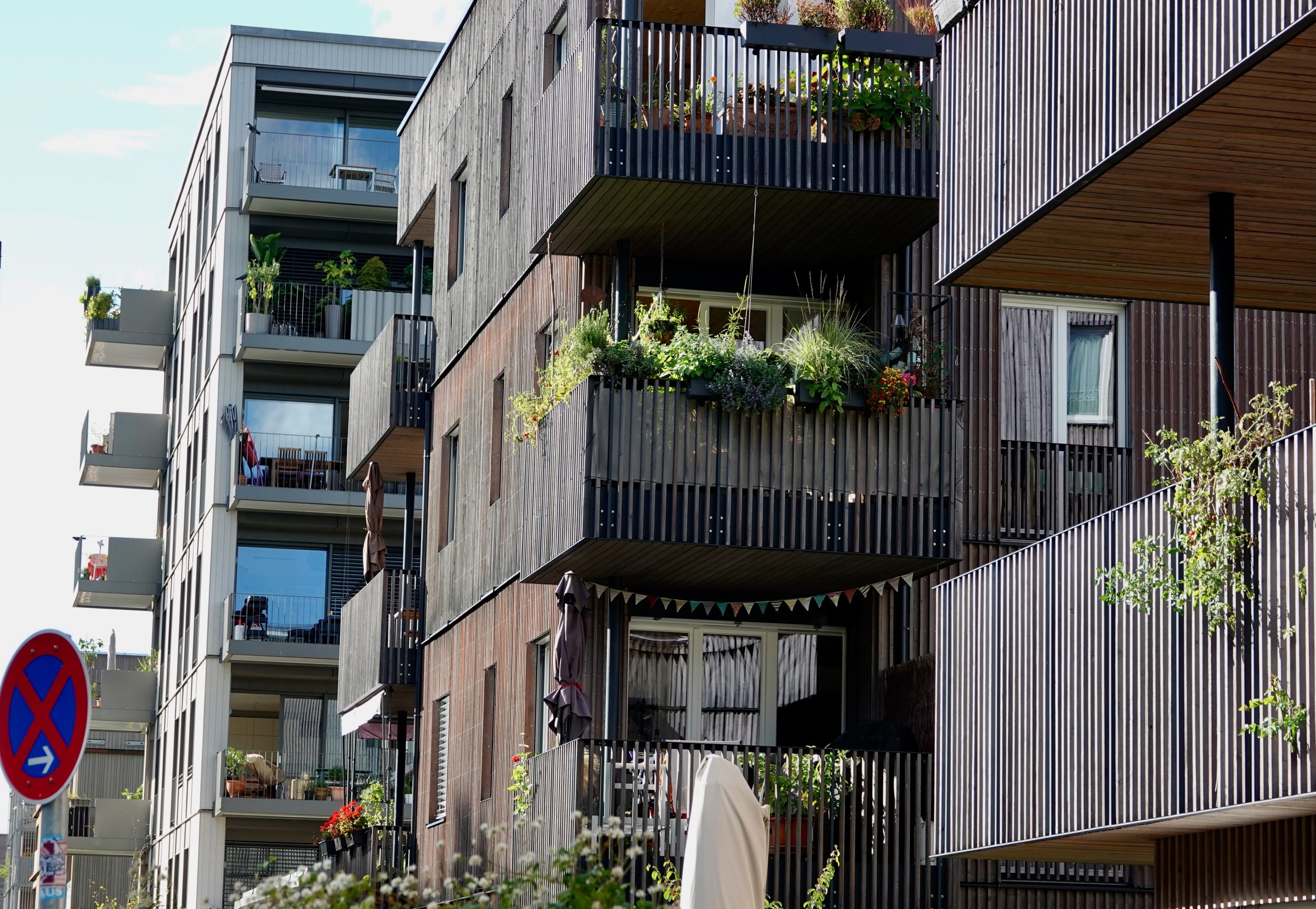
Quality is determined in the brief
Vienna is often cited as a model for affordable housing. What is less well known is why Viennese housing is also of such high quality. Since 1995, every subsidised housing project has been subject to a competitive tender process for investors, administered by the municipal fund wohnfonds_wien. Projects are assessed according to a balance across four pillars:
- economics: land costs, construction costs and user costs,
- social sustainability: suitability for everyday life, communal living, housing adapted to changing needs,
- architecture: the structure of the city, the building and the flat,
- ecology: climate, the circular economy, greenery and open space.
What matters is not that Vienna has criteria. What matters is that it is able to formulate them in advance and apply them consistently. The developer knows what the city wants, and the city can compare proposals on the basis of more than just price.
Zurich and Copenhagen operate in a similar way. In a 2011 referendum, Zurich set itself the target that by 2050, a third of rental flats should be non-profit, and it is continuously assessing its progress towards this goal. Danish municipalities may stipulate in their local plans that up to 25 per cent of flats in new housing developments must be non-profit.
In all cases, the same principle applies: quality is not determined on the building site, but at the outset. If you want a good result, you must be able to set the brief effectively.
A third way between home ownership and the private rental market
In the Czech Republic, we generally envisage housing in two forms: owning a flat or renting from a private landlord. In a number of European cities, however, a third option has gained ground: co-operative and community housing. These share three common features: the building remains free from speculation in the long term, future residents are involved in its design, and part of the space is shared.
The best-known examples can be found in Zurich. The mehr als wohnen co-operative has built around 400 flats for 1,300 people on the Hunziker Areal, along with shops, workshops, a restaurant and a small hotel. This is not a housing estate, but a part of the city with streets and a square. The Kalkbreite co-operative built a block of flats above a tram depot on municipal land, demonstrating that even technical infrastructure can support housing.
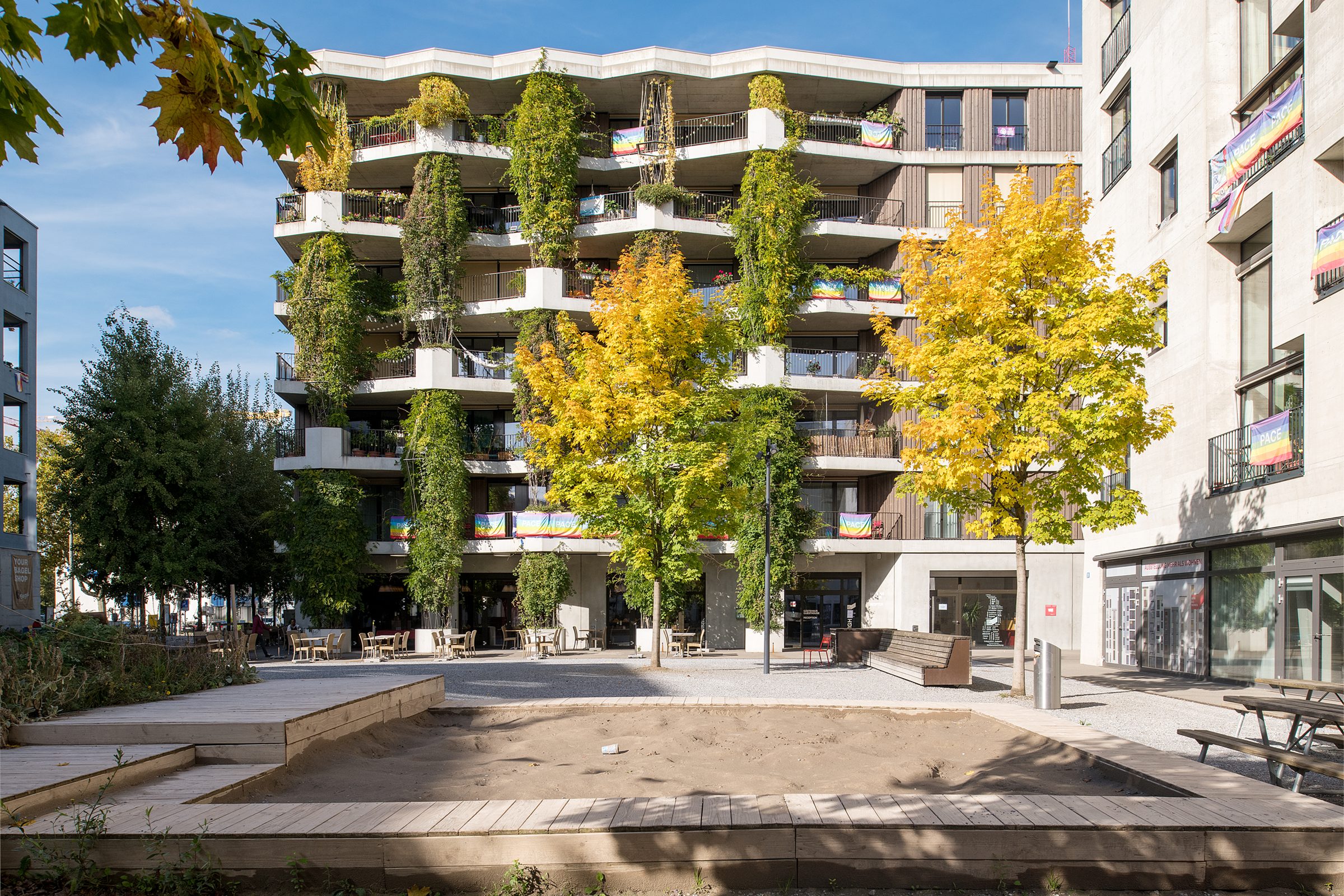
Other cities are adopting and adapting this model:
- Amsterdam has set aside land for housing co-operatives and established a revolving fund which now exceeds €20 million. The first co-operative, De Warren, has 36 flats, with a third of the space being communal.
- Barcelona has provided municipal land to the La Borda co-operative, which comprises 28 flats and which won the EU Mies van der Rohe Award for Emerging Architecture in 2022.
- Brussels has combined a Community Land Trust with care provision. The CALICO project comprises 34 flats for different generations, ‘Housing First’ flats, and facilities for childbirth and end-of-life care.
- Stockholm has had the Färdknäppen retirement home since the 1990s, which is owned by the city’s housing association. The residents are tenants, but they cook together and choose their new neighbours themselves.
This is also linked to a shift in typology. Instead of larger private flats, smaller flats with larger communal spaces are being designed, as well as cluster flats where each person has their own bedroom and bathroom whilst sharing a living area, or multi-generational homes. In Stavanger, Norway, 40 households in the Vindmøllebakken project share 520 m² of communal space.
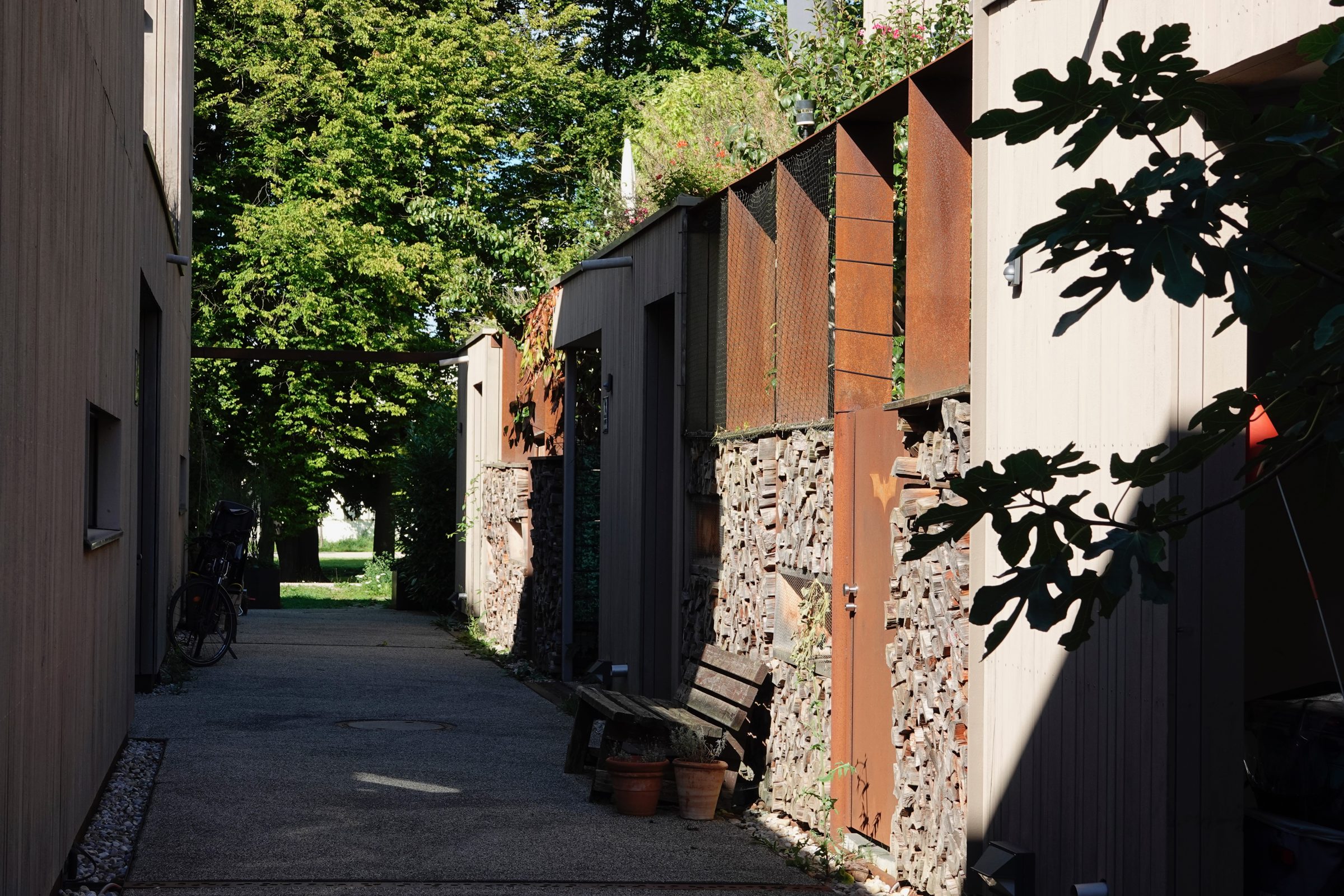
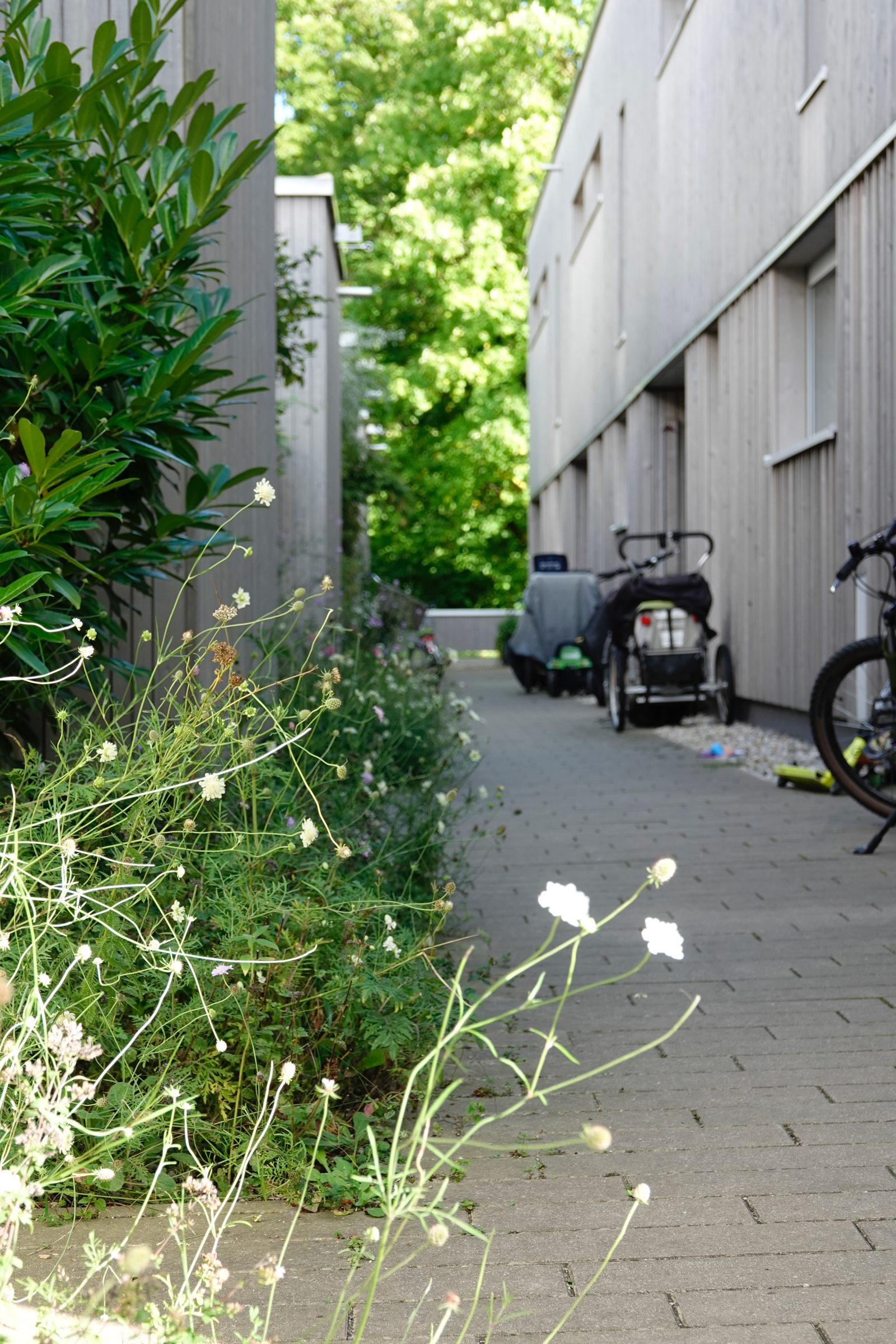
Experience also highlights the limitations. Danish research points out that community housing without involvement from the municipality primarily serves people who have time and capital. For it to be accessible to wider groups, it requires a municipality to provide land, a guarantee or a long-term framework.
Renovation rather than demolition
Most of the housing we will be living in twenty years’ time already exists. That is why the European debate is increasingly shifting from new-builds to refurbishments.
A well-known example comes from Bordeaux. Three social housing blocks from the 1960s, comprising 530 flats, were earmarked for demolition, but the city ultimately ruled this out. Architects Lacaton & Vassal, Frédéric Druot and Christophe Hutin refurbished the blocks whilst they remained occupied: each flat was fitted with a conservatory and a balcony; the cost amounted to around €50,000 per flat; rents did not increase; and the tenants did not have to move out. In 2019, the project won the EU Mies van der Rohe Award, with the jury particularly highlighting the collaboration with residents.
Another approach is large-scale renovation. The Dutch Energiesprong programme uses prefabricated façades and roofs fitted with photovoltaic panels and heat pumps. The renovation takes place quickly, residents can stay in their homes, and the building achieves a net-zero energy balance. The programme is now active in seven countries and has renovated more than 10,000 homes.
In Germany, the Bundesstiftung Baukultur promotes what is known as Umbaukultur, i.e. refurbishment as the default option. In 2024, the Bundestag called for changes to the legal and financial conditions for refurbishment, and since June 2026 has been debating the ‘Gebäudetyp E’ bill. This is intended to simplify building work in cases where safety is not an issue.
Denmark has demonstrated how to finance renovation in the long term. Once their loans have been repaid, non-profit housing associations pay rent into a common fund, the Landsbyggefonden, which is used to finance the renovation of other buildings. Between 2020 and 2026, DKK 30 billion was earmarked for renovations. Even Vienna, with its long tradition of council housing, is currently tackling a large backlog of deferred repairs. Even the best system cannot function without a renovation plan.
This leads to a simple recommendation for municipalities. Before deciding on a municipal block of flats, they should be aware of its technical condition, the mix of flats, the life stages of the residents and the building’s relationship with its surroundings. Only then can repairs, extensions, conversions and new builds be properly compared.
What this means for Czech municipalities
For the first time, Czech municipalities have both a legal and financial framework for council rental housing. However, they often lack the capacity to prepare properly, and it is precisely this that determines whether a good place will be created, or just another block of flats. Based on European experience, six steps can be identified that can also be applied in smaller municipalities:
- Assess the location, not just the plot of land. Accessibility, local amenities, public space and the connection to the surrounding area are just as crucial to the quality of housing as the building itself.
- Identify who the municipality is building for. Young families, older people, teachers, doctors or those in urgent need of housing require different layouts and sizes of flats.
- Compare options for existing buildings. Renovation, extension, conversion and new-build, with estimates of costs and impacts on residents.
- Retain ownership of the land. A building right or long-term lease will ensure that the affordability of housing does not expire once the subsidy ends.
- Specify quality requirements in advance. Criteria similar to Vienna’s four pillars should be included in the brief—not left until the evaluation of the finished project.
- Consider the ground floor and communal spaces. The ground floor, courtyard and communal room make a block of flats an integral part of the town or municipality.
None of this requires a large city or a large budget. However, it does require time for preparation and the ability to set out the vision before the municipality begins selecting a designer or applying for a grant.
Conclusion
Housing in Europe today is not judged by the number of flats built, but by the kind of places that are created. Yet Vienna, Munich, Zurich and Barcelona do not use complicated tools. They hold onto land, know what they want, and know how to brief the commission. This is a lesson that Czech municipalities can also learn. Funding for housing is available. However, good housing begins with the location and a well-prepared brief.
Sources
- European Plan for Affordable Housing – Rural Pact, European Commission
- State of Housing in Europe 2025 – Housing Europe
- [Property Development Competition and the 4-Pillar Model – wohnfonds_wien](https://www.wohnfonds.wien.at/media/Website%20PDF-INFO%20Downloads/Publications/New Build/wfw_property_developer_competition_web.pdf)
- Land tenders – City of Munich
- Housing Programme 2026 – City of Zurich
- Implementation Programme on Housing and Land Use 2024 – Helsinki
- 25 per cent social housing requirement – Copenhagen
- Baugenossenschaft mehr als wohnen
- Genossenschaft Kalkbreite
- Housing Cooperatives in Amsterdam at a turning point – Amsterdam Alternative
- De Warren – Housing Europe
- La Borda – Lacol
- CALICO – Community Land Trust Brussels
- Färdknäppen – CO-HOPE, TU Wien
- Vindmøllebakken – DOGA
- Jakobsen & Larsen: An alternative for whom? (2019)
- Transformation of 530 dwellings, Grand Parc Bordeaux – Floornature
- Energiesprong – World Habitat
- Baukulturbericht – German Bundestag
- Landsbyggefonden – renovation
- Housing Support Act – estav.cz
- Affordable rental housing – České noviny