3 May 2021 · Ing. et Ing. arch. Jiří Lukeš
To grow old at home, or in a care home?
Caring for ageing parents at home, or a high-quality place where they can live out their days? European countries show that this is not a choice between two options, but rather a whole range of housing and care options that should remain part of everyday city life. Five examples from the Netherlands, Austria, Denmark, Sweden and Germany.
A question every family faces
When will it no longer be possible to care for them at home? This is a question asked by most families who are looking after ageing parents. Municipalities face a similar dilemma: should they build care homes for the elderly, or support care at home? Experience across Europe shows that this is not a choice between two options. The quality of life in old age depends on whether a municipality offers a wide range of housing and care options, and whether these remain an integral part of everyday life in the town.
Meanwhile, the Czech Republic is ageing rapidly. People aged 65 and over currently make up about a fifth of the population; by around 2050, this figure will be roughly 30 per cent. At the end of 2023, care homes and specialised care homes had a combined total of around 61,000 beds and recorded over 90,000 unmet applications (some applications are duplicates, as people apply for places in more than one facility).
Different societies, the same direction
Every culture approaches old age differently:
- Northern Europe: Scandinavia and the Netherlands emphasise independence and municipal authority responsibility. Since 1988, Denmark has not built traditional care homes, but rather rental flats with their own kitchen and bathroom, where care is available at any time.
- Germany and Austria: rely on the family, with support from insurance schemes. In Germany, over 80 per cent of people requiring care live at home.
- Japan: care was long considered the responsibility of the family. In 2000, this evolved into a social right funded by insurance.
- China: filial piety is now enshrined in law, but families are smaller and more scattered due to the one-child policy and migration to cities.
- USA: the system relies mainly on the market and personal savings.
Nevertheless, all these countries are converging on the same conclusion. An elderly person should remain at home for as long as possible. When this is no longer feasible, they should move to a place that resembles a home and is located in their neighbourhood. However, care at home only works where houses, streets and services are organised in such a way that people can grow old there.
From a flat to a long-term care home
Between living in one’s own flat and a long-term care home, there are a number of options that are often overlooked in the Czech Republic:
- Flat for older people: accessible flats in ordinary buildings, ideally in the centre of the municipality.
- Homes with care services: rented flats with a carer living on the premises. These are flats, not beds.
- Community living in later life: private flats and large communal areas managed by the residents themselves.
- Retirement homes: the current standard is a household of 8–15 people with private rooms and a shared kitchen, rather than a long corridor and a large dining room.
- Specialised care homes: for people with dementia. These are designed to offer a safe environment where residents can go outside freely.
- Long-term care (LDN): a healthcare service, not housing. Where other options are lacking, it becomes a form of permanent accommodation.
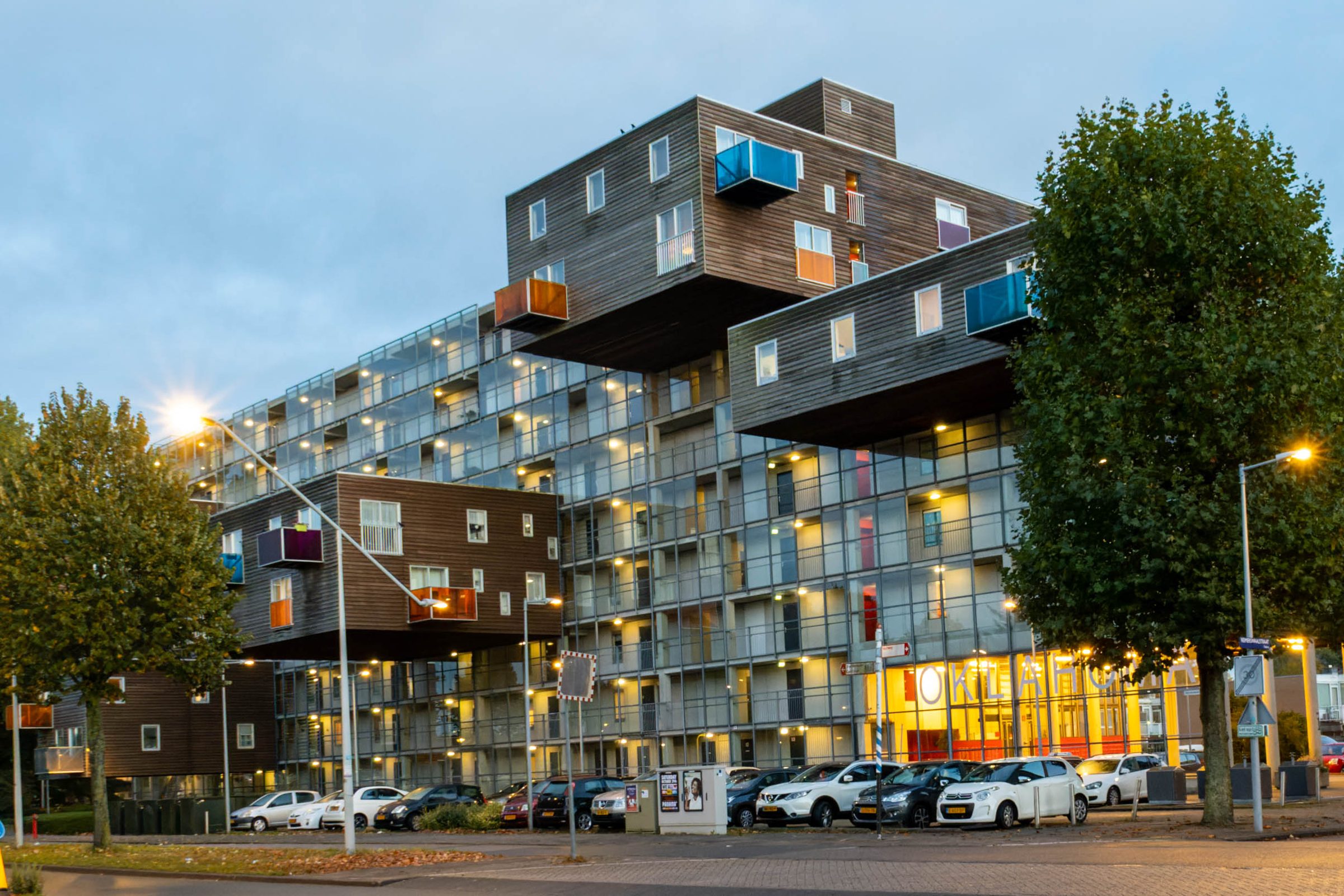
The WoZoCo building in Amsterdam by the MVRDV studio (1997), with 100 flats for people aged 55 and over, demonstrates that flats for older people can also be a distinctive feature of the city. Thirteen flats are cantilevered from the northern façade to preserve the greenery around the building.
Five European examples
De Hogeweyk (Weesp, Netherlands, 2009) is a ‘village’ for 152 people with advanced dementia, divided into 23 households of six to eight people each. Residents move freely around the squares, the boulevard and the park, and shop at the local supermarket. The project has transformed the way we think about what care for people with dementia can look like.
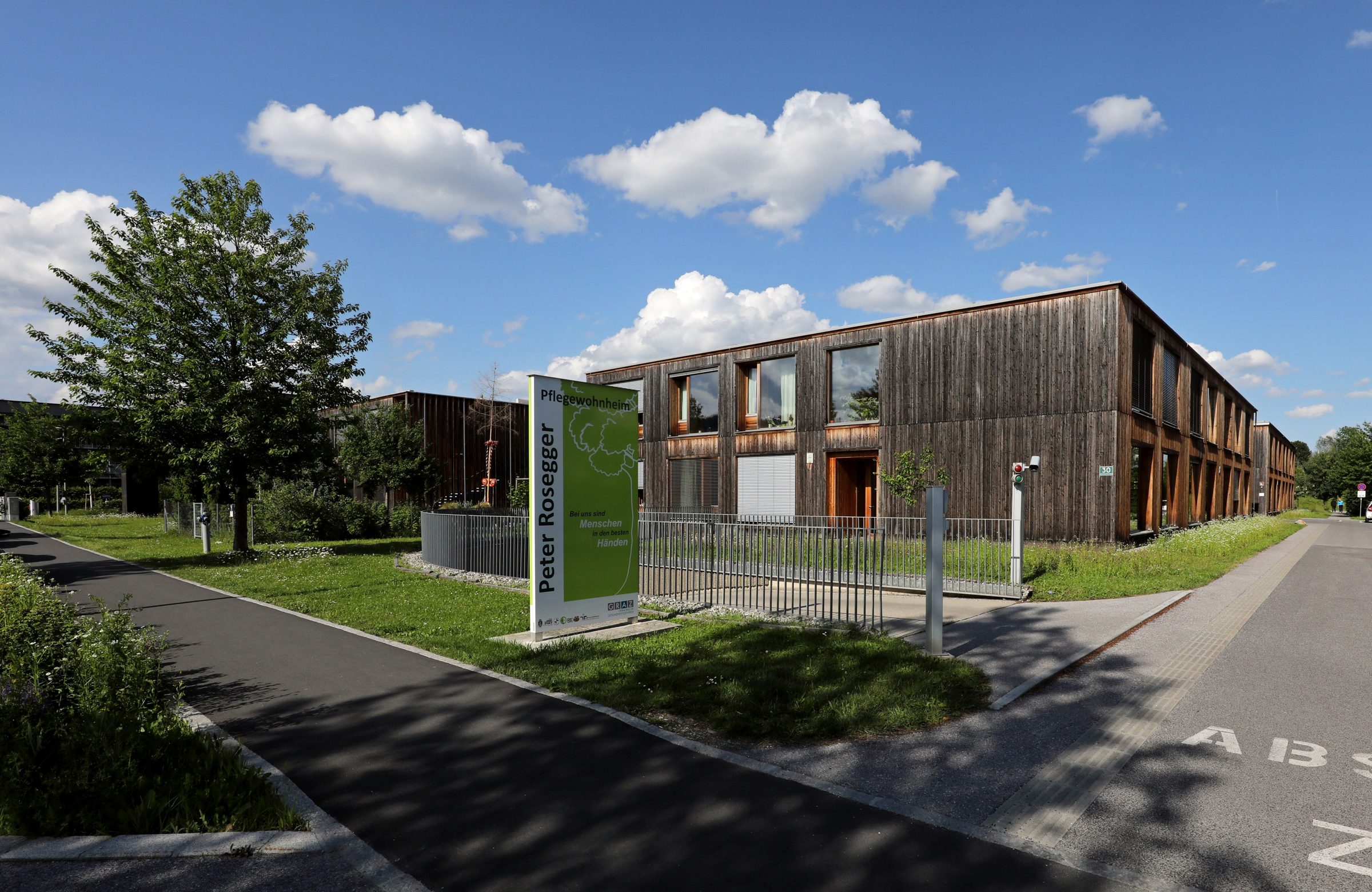
The Peter Rosegger Care Home (Graz, Austria), designed by Dietger Wissounig Architekten, comprises eight residential units, each accommodating 13 residents, arranged around a communal ‘village square’ with gardens and atria. It is a timber-framed building built to passive house standards, situated next to a new city park. In 2014, it won the Geramb Rose Award.
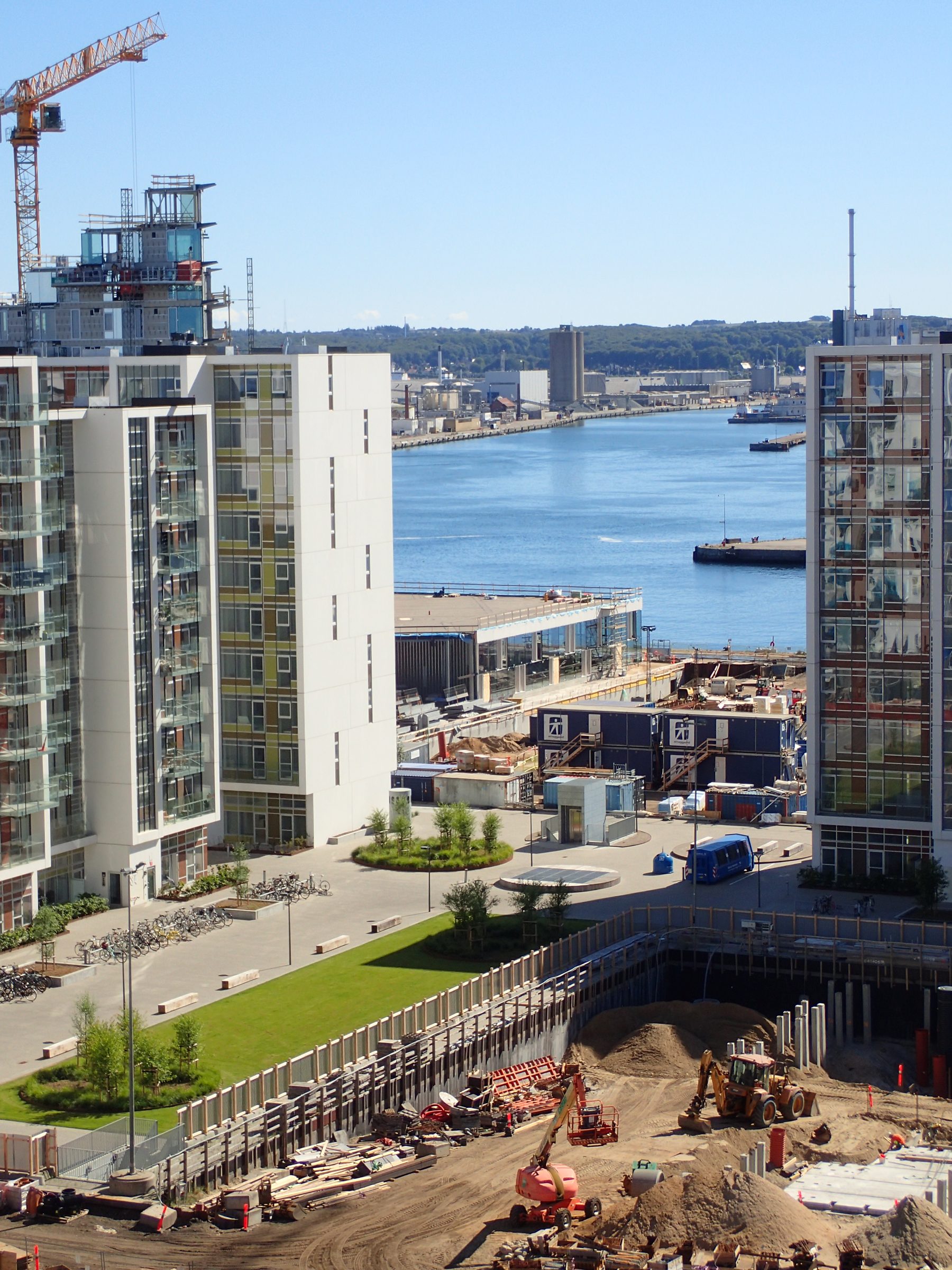
Generationernes Hus (Aarhus, Denmark, 2020) brings together, under one roof, 100 care flats, 40 flats for young people, 40 family flats and a nursery for 150 children. Based on a similar principle, the Sølund development is being built in Copenhagen, comprising 360 care flats, flats for young people and a nursery in an urban block by the lakes.
Färdknäppen (Stockholm, Sweden, 1993) is a communal housing project for people aged 45 and over. The residents had their flats reduced in size by 10 per cent to create around 650 m² of communal space: a kitchen, dining room, library and workshops. It has been operating for over thirty years without institutional management.
The Bielefeld Model (Bielefeld, Germany, since 1996) places accessible flats for all generations within ordinary neighbourhoods. Care is available round the clock, but without a flat-rate care charge, and a café on the ground floor serves as a meeting place. Today, it comprises 14 projects and around 450 households.
What this means for municipalities
European experiences show a number of recurring themes:
- Plan a wide range of options, not just care homes. Flats for older people, residential care homes and home care reduce the pressure on expensive care beds.
- Build in the centre of the municipality. Housing for older people belongs near the town square, bus stop and shops, not on the outskirts.
- Opt for a small scale. Households of 8–15 people, with private rooms and en-suite bathrooms, and direct access to the garden.
- Bring generations and functions together. A nursery, flats for young people or a café bring life to the building and attract people from the local area.
- Specify quality. An architectural competition combined with a clear vision of how the building will be used gives the municipality the assurance that a building will be created that will serve for decades.
A good home for older people is not just a question of the number of beds, but also of the kind of place the municipality creates. A place where people can remain true to themselves even when they need help.
Sources
- Eurostat – Population structure and ageing
- Czech Statistical Office – The number of older people will rise significantly in the coming decades
- Czech Statistical Office – Social care facilities and their clients
- Lovguiden – The history of Plejehjemmet
- bpb – Long-term care insurance
- Detail – Dementia Village De Hogeweyk
- Dietger Wissounig – Peter Rosegger Nursing Home
- Sweco – House of Generations
- C.F. Møller – The New Sølund
- De Gruyter – Färdknäppen Collective House
- MVRDV – WoZoCo
- MoPAct – Bielefeld Model